One companion,
three very different people.
Enterprise AI isn't difficult because of the technology. It's difficult because every user expects something different. Inside Fosfor Decision Cloud, one AI companion had to support three distinct personas with different goals, workflows, and definitions of success. Designing one experience that felt intelligent to all of them became the core challenge of this project.
The challenge wasn't designing one AI assistant. It was designing one assistant that could think differently for three completely different people, without making any of them feel like the product wasn't built for them.
Opportunity
Create one AI companion that could adapt to different workflows without forcing users to change how they work.
Challenge
Each persona solved different problems, making a single, one-size-fits-all AI experience ineffective.
My Contribution
Defined the AI experience strategy, led user research, designed the interaction model, and collaborated closely with engineering to bring the product to life.
Design Approach
Embedded contextual AI directly into existing workflows, making assistance available exactly when users needed it.
Outcome
Established a reusable AI interaction framework that delivered a consistent experience across three personas while scaling with the Decision Cloud ecosystem.
Faster to insight, for all three.
3
40%
80%
The same wall, hit three different ways.
Across all three roles, people hit the same wall, complex data workflows and no easy way to extract insight they could act on. Each persona struggled at a different point, and none of them had intelligent assistance that fit how they actually worked.
One companion that makes every step from data to decision feel guided rather than fought.
01
Boost real productivity across the data to decision journey
02
Fit the experience to three distinct personas
03
Build trust and security into every interaction
04
Keep the assistance contextual, not generic
Three phases, three personas.
Research and insights
Mapped the needs of all three personas through interviews and analysis.
Ideation and wireframing
Explored how an AI companion could sit inside existing workflows without disrupting them.
Prototyping and testing
Built interactive prototypes and refined them, including split testing of key interactions.
Three personas, three needs.
Data Designers
Needed help managing and transforming large datasets before anything else.
Insight Designers
Needed sharper tools to analyse data and derive insight from it.
Decision Designers
Needed an intuitive way to navigate recommendations and act with confidence.
It meets you where you sit.
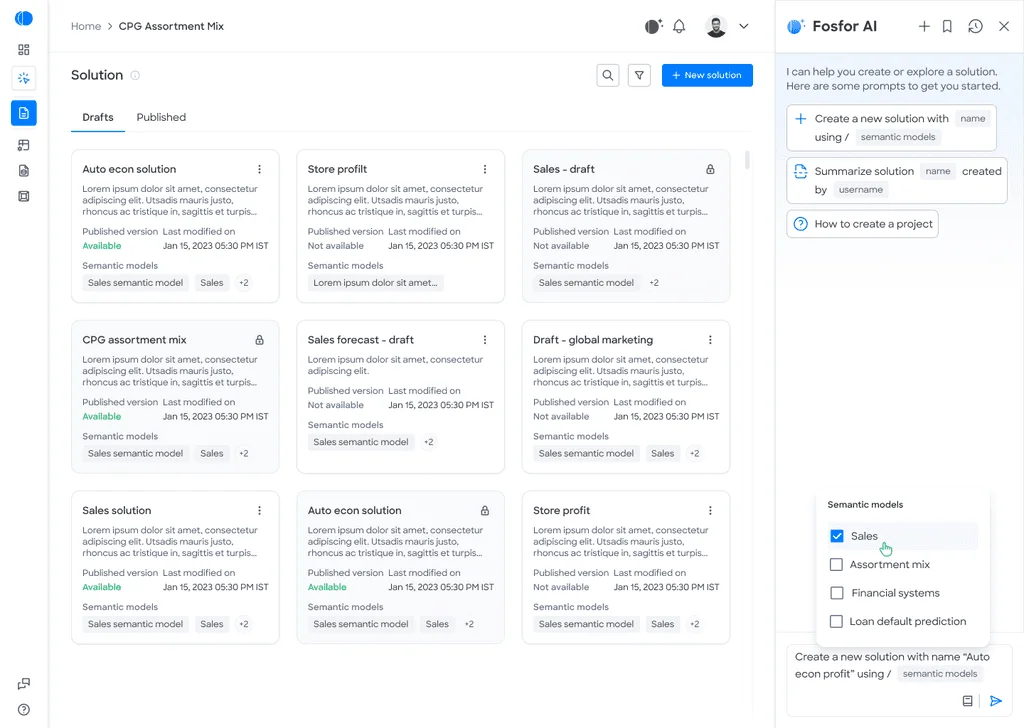
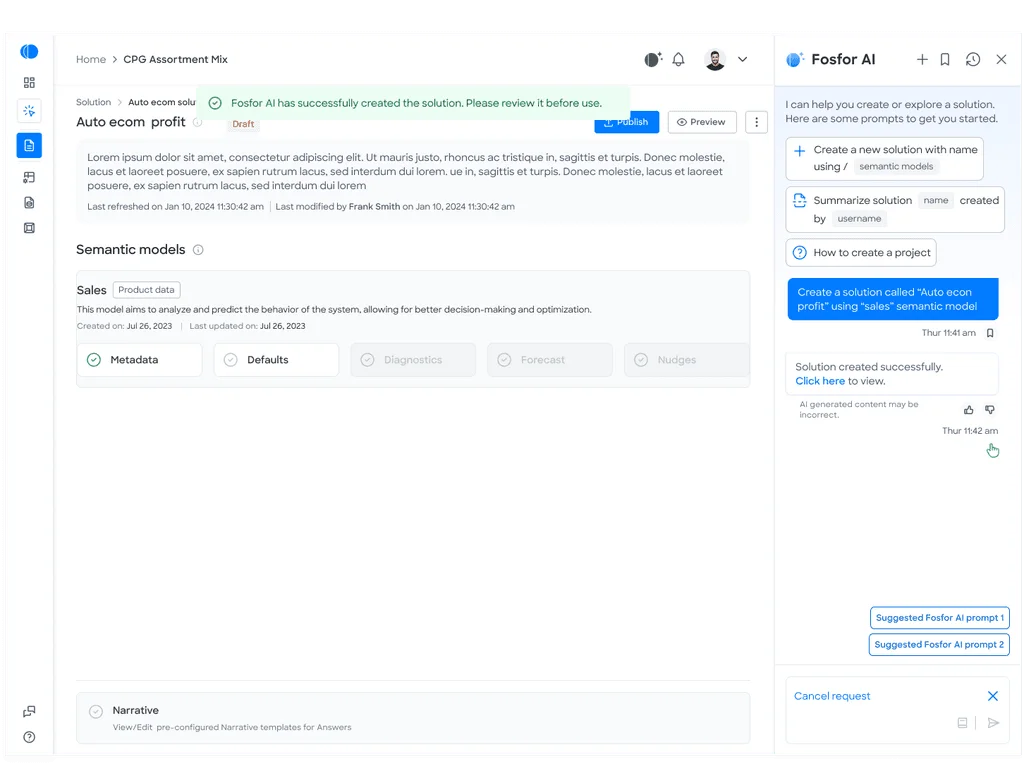
Fosfor AI, a single companion that adapts its help to whoever is in the data to decision seat.
What makes the companion work.
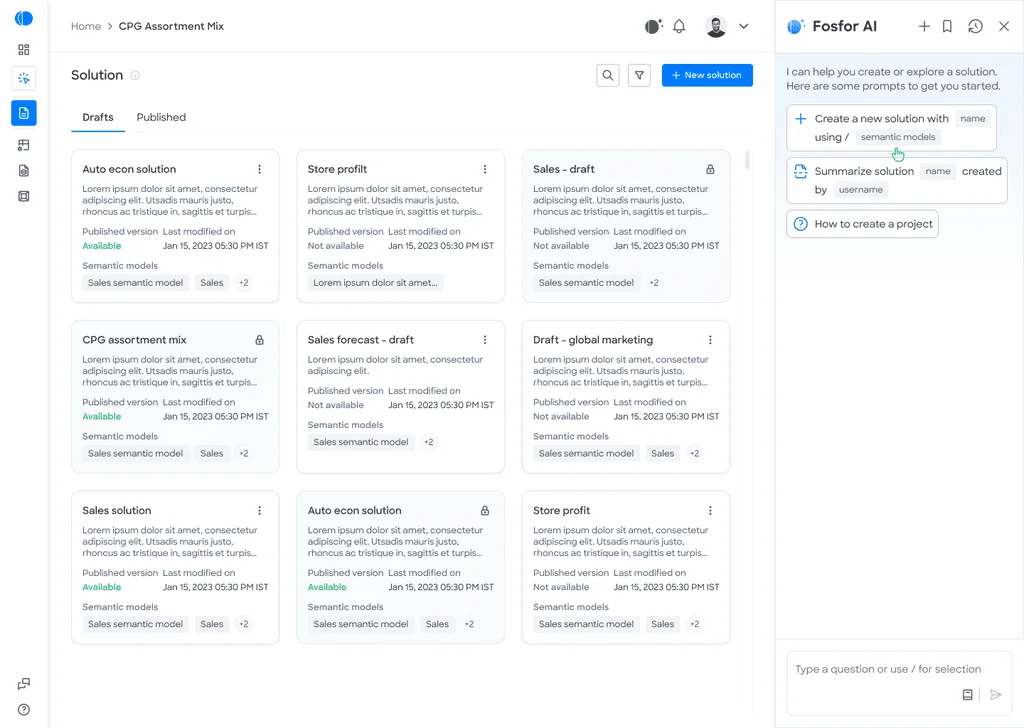
Help that knows where you are.
Generic assistance means reading suggestions that have nothing to do with the task in front of you. Prompts are grounded in the current step instead, so the companion answers the question actually being asked.
Three roles, one companion.
Data, Insight and Decision Designers each hit the wall at a different point. One companion runs the whole journey rather than three tools, so help feels the same wherever you join it.
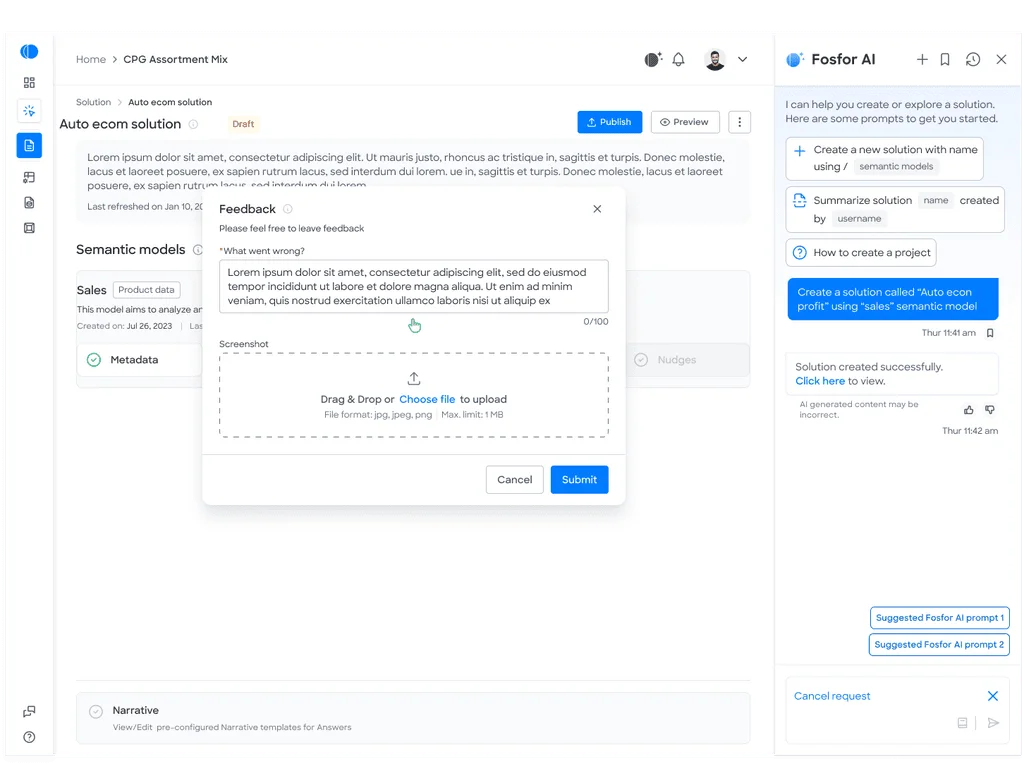
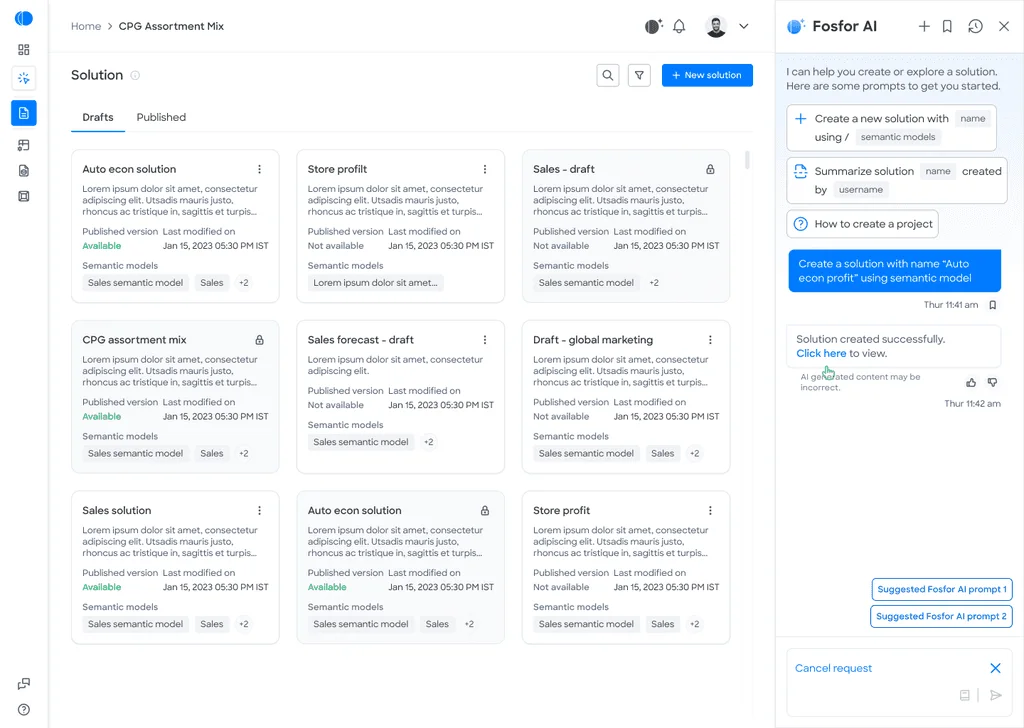
You can see what it did.
An assistant people cannot audit is one they route around. Controls are explicit and every generated solution can be reviewed and rated, so trust is earned rather than assumed.
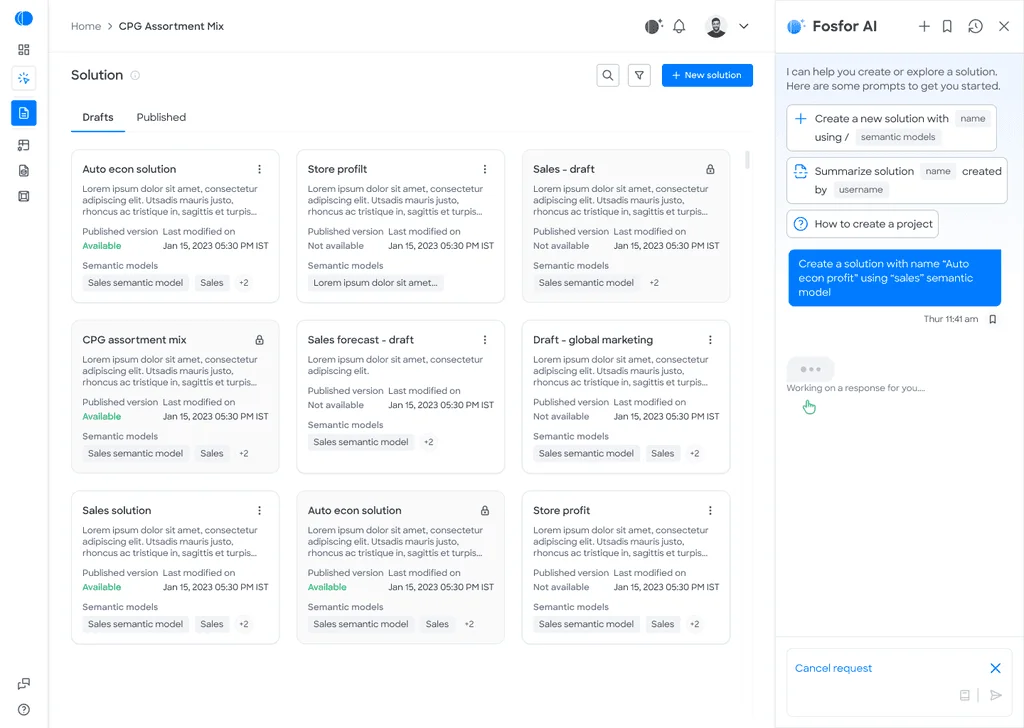
It remembers the conversation.
Assistance that forgets between questions makes the person carry the thread. Four layers, context, interaction, response and memory, hold it instead, so a session builds rather than restarting.
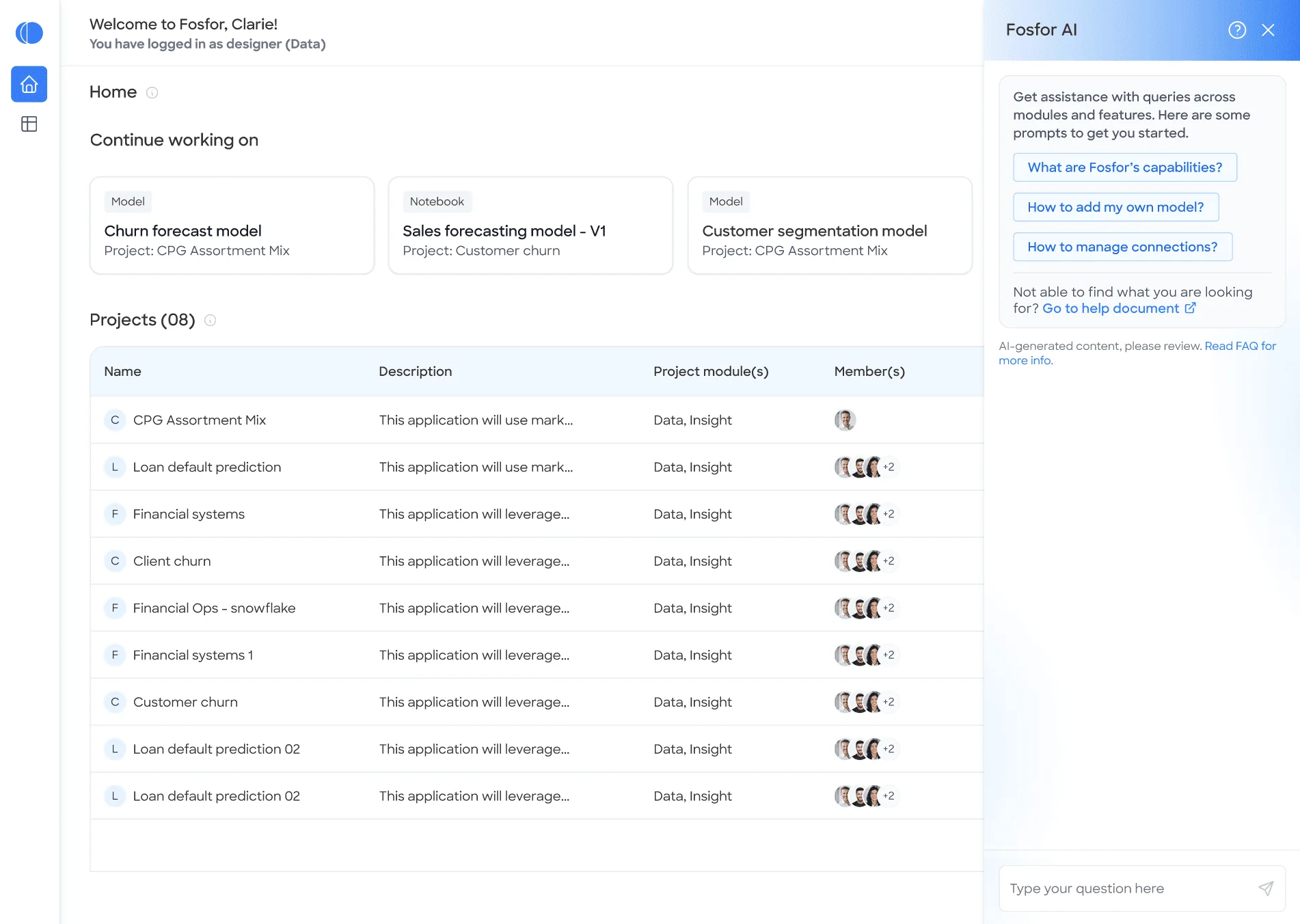
The companion in place.
The companion open on the home dashboard, where most sessions begin.
The same task, now guided.
The workflow before and after the companion, the same task made guided.
The workflow
Data to decision
- The same task made guided instead of fought
Good AI assistance does not show off, it quietly removes the next obstacle in front of the person.
Find the spine before the edges.
Designing for three personas at once taught me to find the shared spine of an experience before tailoring the edges.
Moderated testing bore that out. Time to insight dropped by about 40 percent and task completion reached eight in ten, so the shared surface earned its place. The next thing I would watch is whether those gains hold in everyday production use, not just a test.
From raw data to a confident decision, with a companion the whole way.